Komodo National Park Facts: Fees, Quota, Seasons & Wildlife

Komodo National Park Facts: Fees, Quota, Seasons & Wildlife

Information, not advice: Komodo Ticket is an independent guide — not the Komodo National Park authority and not an official government website. Park entrance and conservation fees are set by the Indonesian authorities and can change; prices shown are ranges last verified June 2026, so confirm current rates and quota rules through official channels before you travel. Bookings are fulfilled by our partner, Komodo Luxury, who may pay us a referral fee at no extra cost to you.

These are the core komodo national park facts visitors ask us for most: how many people can enter per day, what you’ll pay in fees, when the park opens, and how to book within the new SiOra quota system. This page gathers verified numbers and rules into one practical reference for trips in 2026.

Komodo Ticket is an independent information hub and booking desk in Labuan Bajo; trips are operated by our partner Komodo Luxury. No one can pay to change what we publish; if you proceed with our partner they may pay us a referral fee at no extra cost to you.

Key Komodo National Park Facts at a Glance

Official name
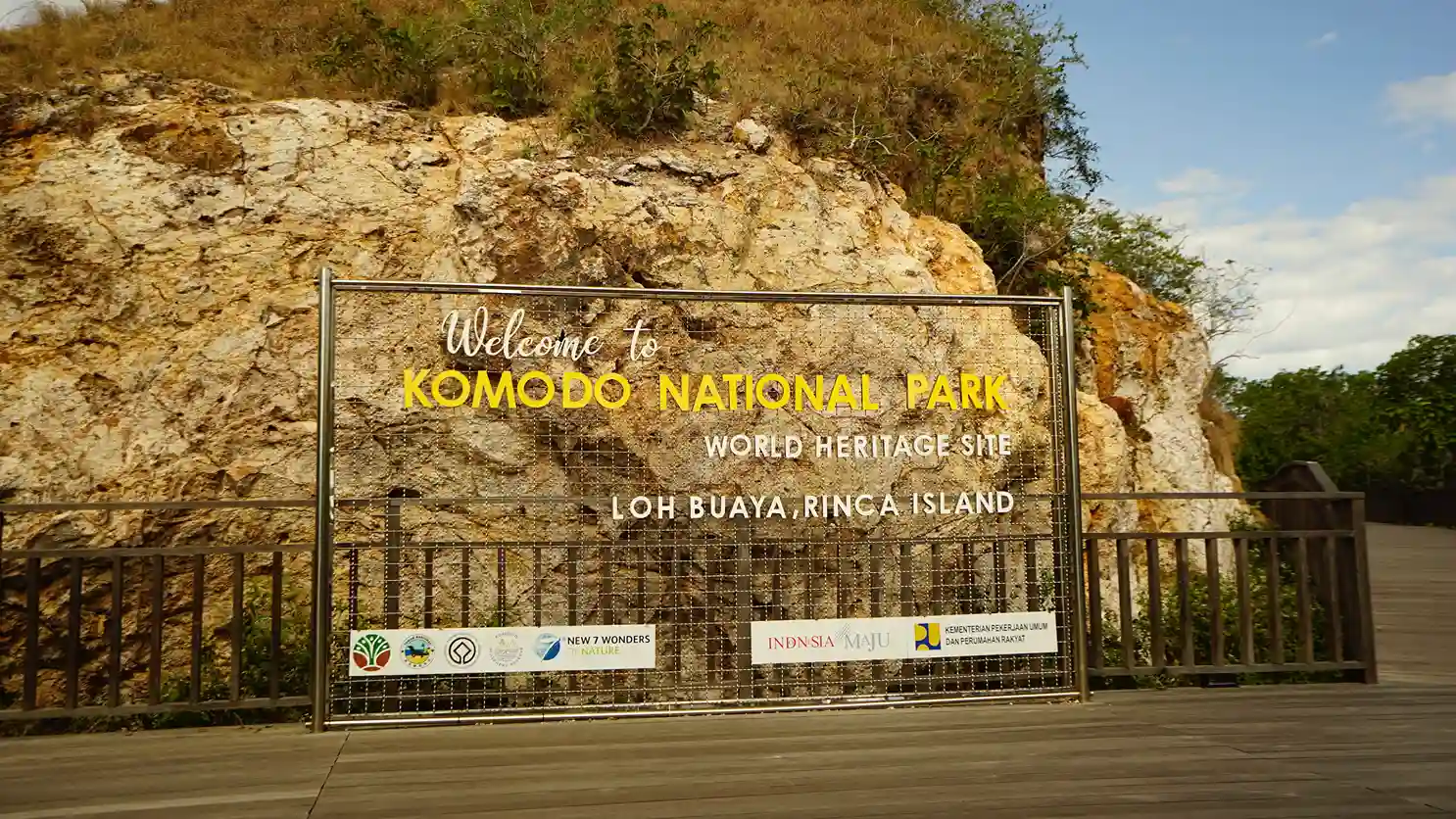
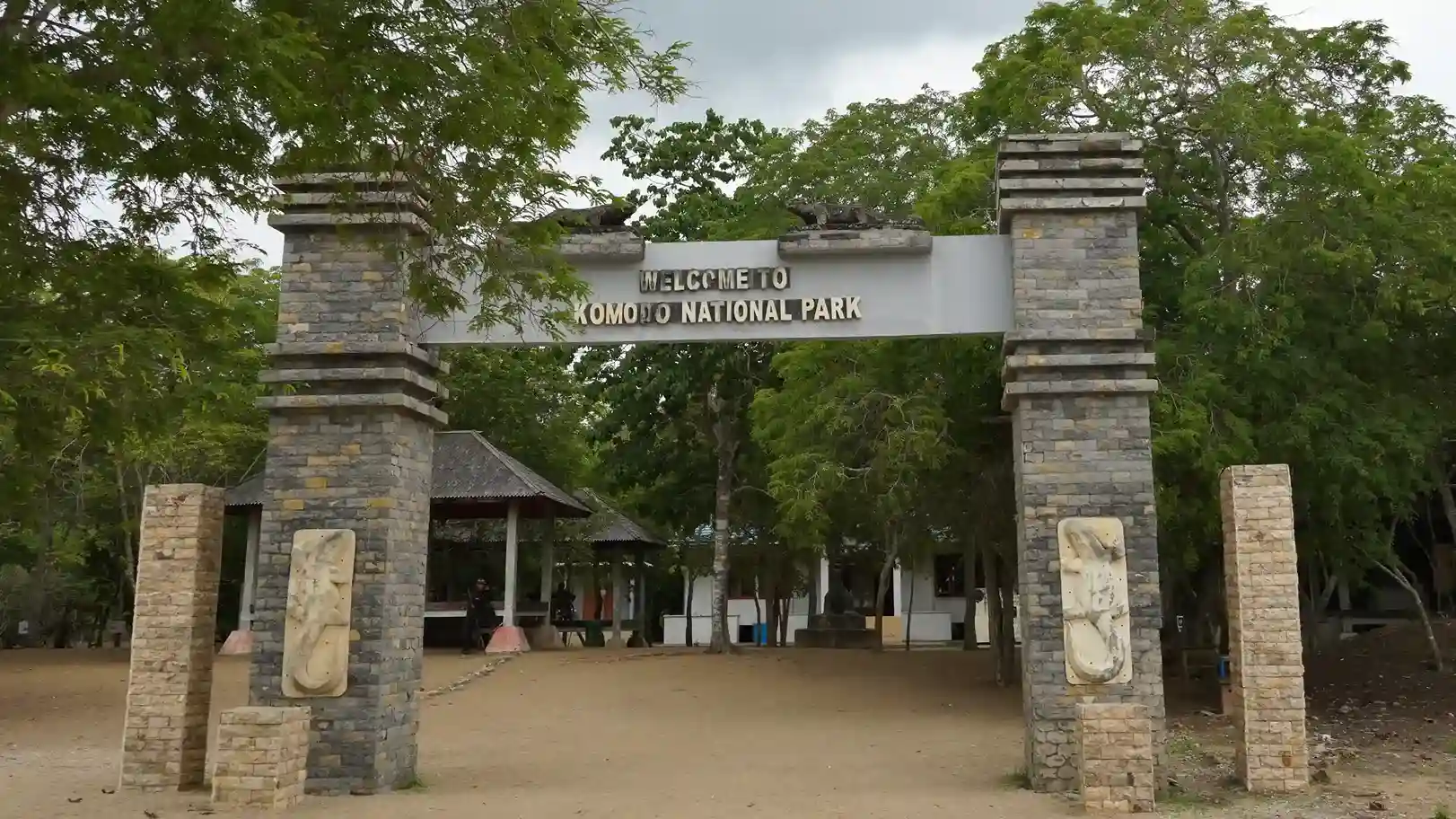
Komodo National Park (Taman Nasional Komodo), a UNESCO World Heritage Site and Man and the Biosphere Reserve.
Total park area
Approx. 1,800 km² total (about one-third land, two-thirds marine). This figure is drawn from long-standing public conservation references and was last verified June 2026.
Main islands
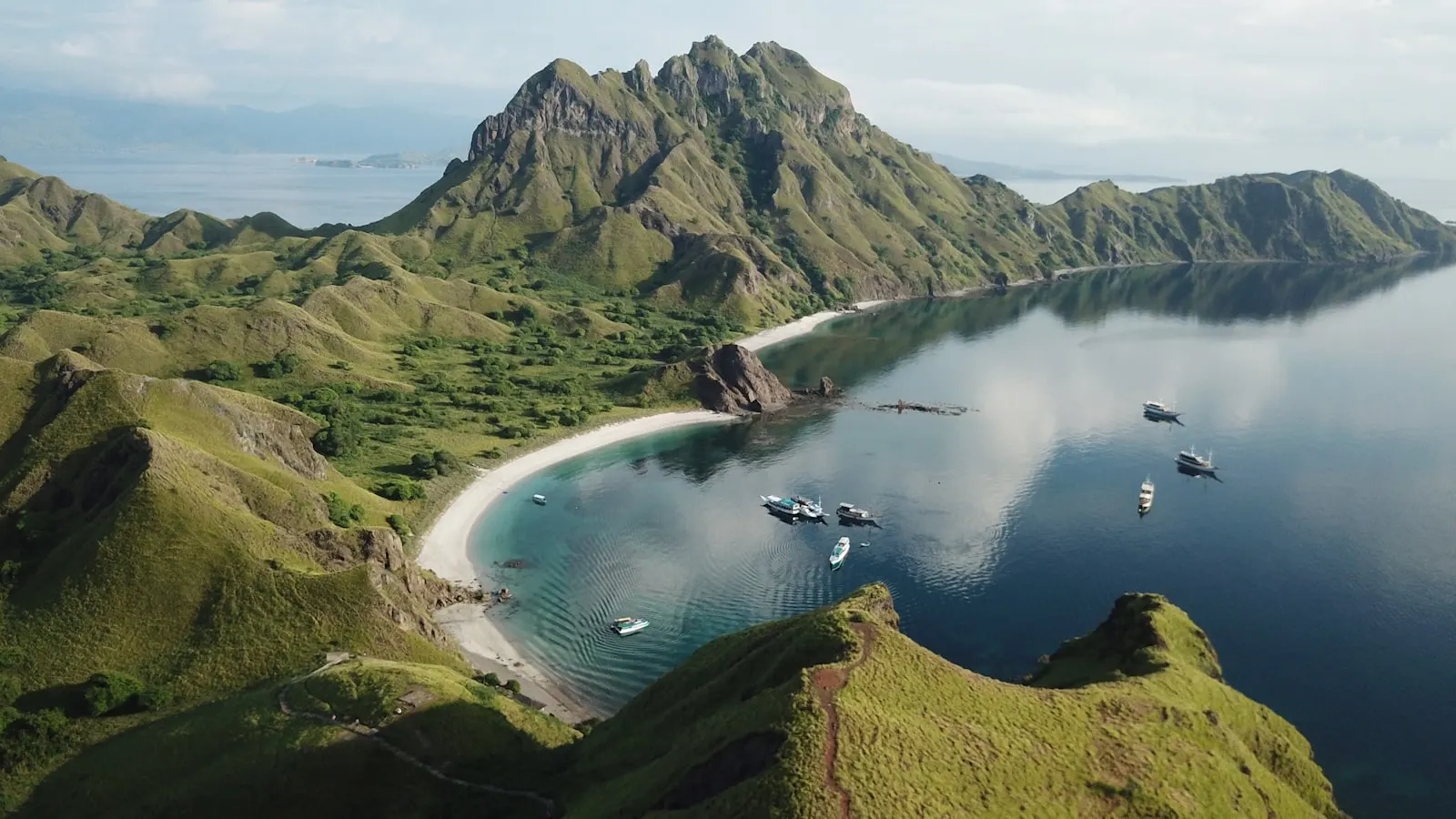
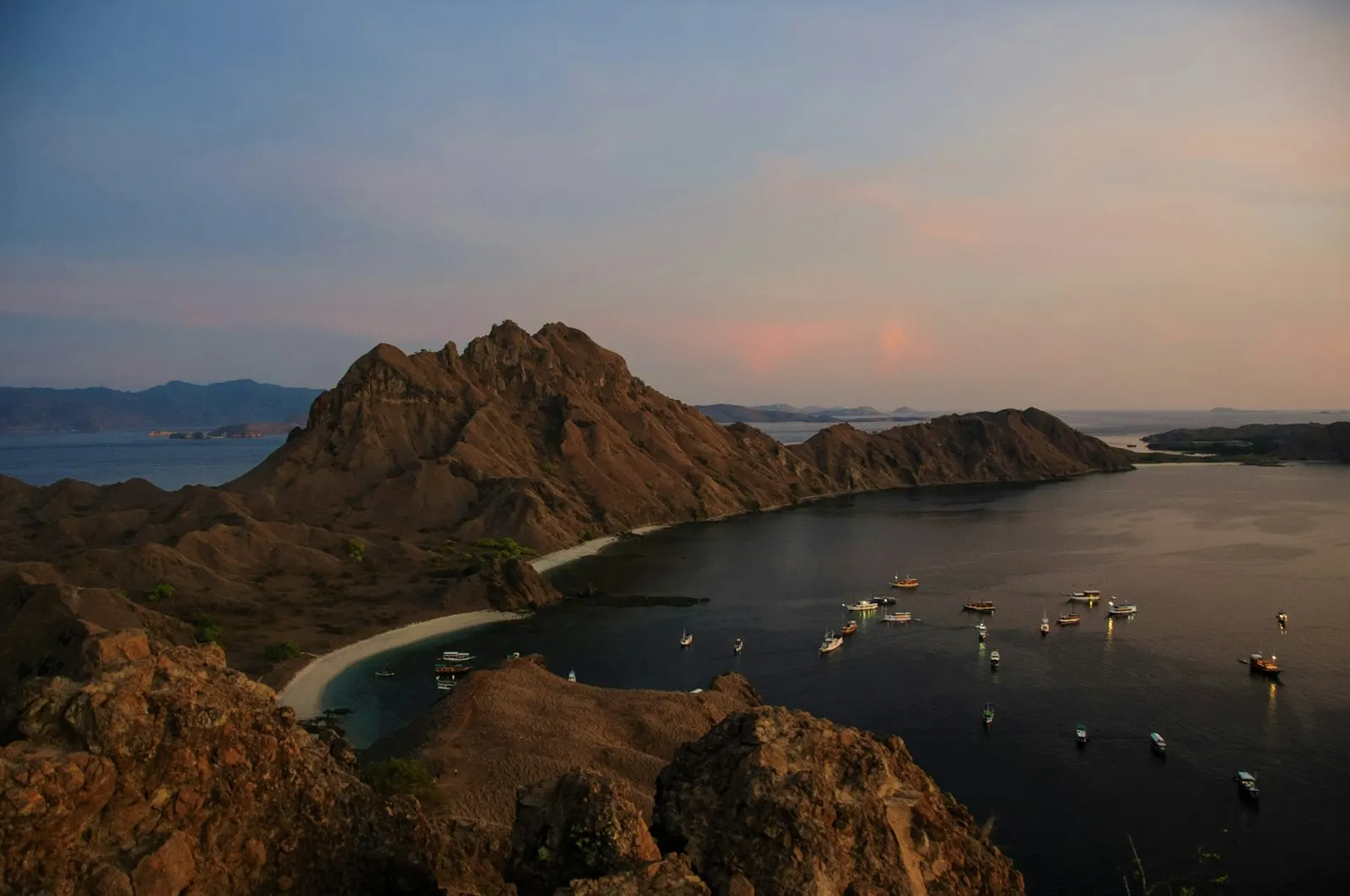
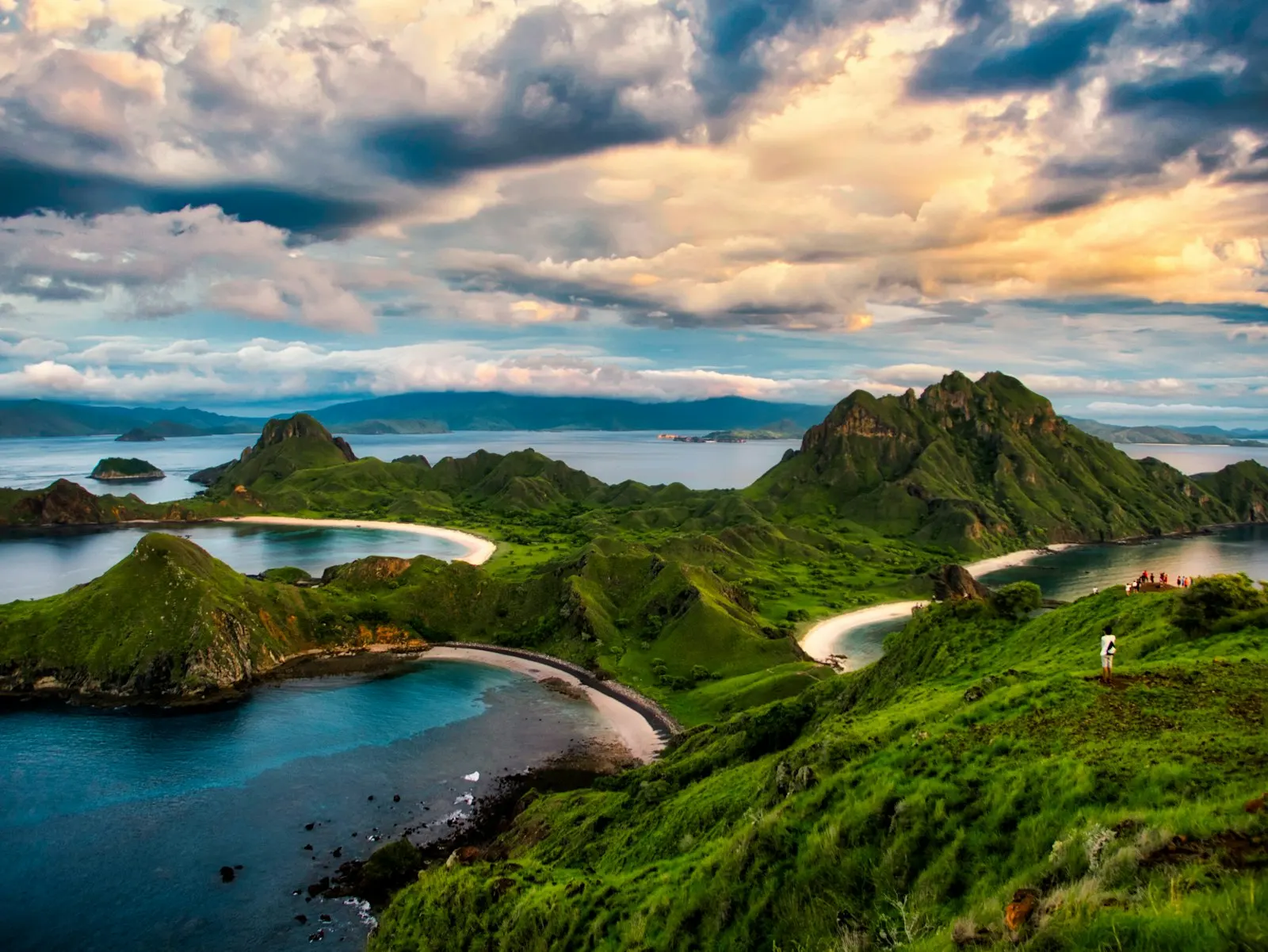
Komodo, Rinca, and Padar are the three main islands, plus numerous smaller islands such as Gili Lawa Darat, Gili Lawa Laut, and dozens of unnamed islets.
Primary purpose
Conservation of Komodo dragons (Varanus komodoensis), dry island ecosystems, coral reefs, and associated marine life including manta rays and reef sharks.
Management authority
Balai Taman Nasional Komodo (Komodo National Park Authority), under the Indonesian Ministry of Environment and Forestry.
Core gateway town
Labuan Bajo, on the western tip of Flores Island, East Nusa Tenggara, Indonesia.
Access ports
Labuan Bajo is the main sea and air gateway; some longer liveaboard itineraries also arrive from Bali, Lombok, Sumbawa, or Alor but still require valid Komodo park permits.
Last comprehensive verification
All figures and regulations on this page were last systematically checked against official and local operator sources in June 2026. Some items are still tagged “subject to change” where government regulations are under review.

Entrance Fees & 2026 Regulations

Overview of Komodo National Park 2026 Entrance Fee and Regulations

Komodo’s fee system is a layered mix of conservation fees, regional retributions, activity fees (trekking, diving, snorkeling), and ranger services. Exact numbers change periodically with new regulations, but the structure stays broadly similar.

For 2026, visitors should expect:

  • A base per-person conservation fee that differs for Indonesian citizens and foreign visitors.
  • Additional per-day or per-activity fees for trekking, diving, or using cameras/drones (drones require special permits).
  • Boat entry fees that apply per vessel, often bundled into your tour cost by the operator.
  • Compulsory local ranger fees for most land-based visits to Komodo and Rinca islands.

Because government decrees can be updated with little public notice, all price ranges below are flagged “last verified June 2026” and should be treated as indicative, not guaranteed.

Typical Fee Ranges (Last Verified June 2026)

Fee type Who pays Typical range (IDR) Notes (June 2026)
Base conservation / entrance All visitors (per person, per day) Approx. IDR 150,000 – 400,000 Varies by nationality and weekday/holiday classification; exact rates subject to regulatory updates.
Trekking fee (Komodo/Rinca) Per person per trekking visit Approx. IDR 50,000 – 150,000 Depends on trail choice and island; guided trekking is mandatory.
Dive/snorkel activity fee Per person per day Approx. IDR 50,000 – 200,000 On top of base park fee; usually bundled in dive/liveaboard prices.
Boat entry fee Per vessel per day Approx. IDR 150,000 – 400,000 Applies to day boats and liveaboards; usually handled by your operator.
Local guide / ranger fee Per group per trek Approx. IDR 120,000 – 300,000 Paid at island posts or via operator; required for dragon habitat walks.
Camera / drone permits Per device, per visit/period Standard cameras often included; drones can exceed IDR 1,000,000 Drones need prior written permission; rules enforced inconsistently but tightening.

Most visitors will never pay these line items individually. A reputable Labuan Bajo liveaboard including Komodo park permits will usually bundle the relevant entrance, ranger, and activity fees into a single trip price. Always ask your operator to confirm which fees are included and which are payable in cash on arrival.

Komodo National Park Child Tickets and Quota Rules

Child policies remain less standardized than adult tickets and can vary slightly between fee categories and local posts, but some broad principles apply in 2026:

  • Children are counted in the 1,000-person daily visitor quota (see the quota section below) regardless of discounted pricing.
  • Reduced or waived base fees are sometimes available for very young children, especially Indonesian nationals; foreign visitors may see partial reductions rather than full waivers.
  • Safety rules override ticket rules: very young children may not be allowed on certain trekking routes near wild Komodo dragons, even if they hold valid tickets.

Because posted child ticket policies at island gates can change and may differ from what’s printed in older regulations, families should confirm current rules with their operator 1–2 weeks before travel and again at ticketing. Our desk can help check the latest situation as part of plan your trip support on WhatsApp.

Daily Visitor Quota & SiOra Booking System

The 1,000-Visitors-Per-Day Cap (Since April 2026)

As of April 2026, Komodo National Park applies a total daily visitor quota of 1,000 people. This cap is intended to reduce crowding at popular sites and limit human pressure on dragon habitats and sensitive reefs.

Key facts about the 1,000 daily cap:

  • It covers all islands and activities: day trips, liveaboards, dive boats, and independent boats are all counted against the same aggregate number.
  • Both foreign and domestic visitors are counted equally in the quota.
  • Children and infants count as visitors for quota purposes, regardless of ticket discounts.
  • The count is calendar-day based, aligning with park opening hours rather than overnight stays.
Can Dive Boats Still Enter Komodo with the 1,000 Cap?

Yes. Dive boats and liveaboard vessels can still enter Komodo National Park under the 1,000-visitor limit, but their guests occupy part of that daily quota.

Practically, this means:

  • Legitimate dive operators must pre-register their guest lists in the same SiOra system as day-trip operators.
  • On high-demand days, last-minute additions may be refused if the daily visitor ceiling has already been reached in the system.
  • Boats attempting to enter without valid, pre-booked permits risk being turned away at sea or denied access to key sites.

Reputable Labuan Bajo liveaboard including Komodo park permits will manage these allocations on your behalf. It is increasingly important to secure trips early for peak months so your boat can lock in both its vessel slot and individual visitor entries.

The SiOra Digital System: How It Works

The park’s quota is enforced via a digital booking platform commonly referred to as the SiOra app/system. It is primarily intended for licensed operators, not individual tourists, though policy is evolving.

Core features in 2026:

  • Operator-based accounts: Registered tour and dive operators log in to reserve daily visitor allocations linked to specific boats and dates.
  • Real-time capacity tracking: The system decrements available slots as operators confirm visitors, aiming to prevent overbooking beyond 1,000 per day.
  • Integration with on-site checks: Rangers and harbor staff can cross-check visitor manifests against SiOra entries.

How to Check Remaining Komodo National Park Slots Online

As of June 2026, public access to live remaining quota numbers is limited. There is no fully stable, tourist-facing web counter yet, and interfaces change as the system is refined.

Currently, your practical options are:

  • Ask your operator directly: Licensed companies can see remaining capacity in their SiOra interface for selected dates and report whether your chosen day is near full.
  • Use a local desk: Our team in Labuan Bajo can check indicative availability across multiple operators and days if you contact us via WhatsApp through plan your trip.
  • Monitor official announcements: On very crowded dates (national holidays, festival periods), the park authority may publish “quota full” notices through their channels or local media.

Given these constraints, the safest tactic is to choose dates early and secure your booking before flights and hotels, especially for public holidays and school breaks.

Opening Hours & Timing from Labuan Bajo

Komodo National Park Morning Opening Time from Labuan Bajo

Komodo National Park does not have a single gate like a city zoo, but for planning purposes, the park is generally considered to open to visitors in the morning around 07:00 local time for on-island activities such as trekking. Exact times can vary slightly by island post and season.

From Labuan Bajo, this translates roughly as:

  • Boat departures: Many day trips depart between 06:00 and 07:30 to arrive at key sites soon after opening.
  • First treks on Komodo or Rinca: Commonly start between 08:00 and 09:00 depending on boat speed and schedule.
  • Last safe departures back to Labuan Bajo: Early to mid-afternoon from outer sites, to account for weather or sea-state changes later in the day.

Night access to dragon trekking trails is generally not allowed for regular visitors. Certain liveaboards may anchor in approved bays overnight, but land-based walks and ranger-guided treks follow daylight hours for safety.

Best Seasons, Weather & Wildlife Windows

Best Months 2026 to Avoid Full Komodo Visitor Quota

To minimize the risk of hitting a full quota day, pair your trip with quieter travel periods. Based on typical patterns and the first seasons under the 1,000 cap, 2026 is likely to see:

  • Lower pressure months:
    • Mid-January to early March (outside Lunar New Year/long weekends) – wetter, but generally fewer international visitors.
    • Second half of October through early December – post-peak, sea conditions variable but quota pressure usually lower.
  • Higher pressure months:
    • July–August – high season for global travel; quotas can fill in advance.
    • Late December–early January – year-end holidays, higher risk of fully booked days.
    • Idul Fitri and other major Indonesian holidays – domestic tourism spikes.

Weather and demand vary year to year. The safest approach for 2026 is still to secure preferred dates early, but if your schedule is flexible, aim for shoulder seasons (April–June and September–early October) to balance calmer seas, good visibility, and moderate visitor demand.

Komodo Dragon Activity & Viewing

Komodo dragons can be seen all year, but activity levels vary with temperature and rainfall. Some field observations and ranger feedback suggest:

  • Morning treks (roughly 08:00–10:00) offer better chances of seeing dragons active rather than resting.
  • Dry season months (roughly April–October) often bring more predictable trekking conditions on dry trails.
  • Wet-season foliage can be denser, sometimes making dragons slightly harder to spot off-trail.

No operator or ranger can guarantee sightings. Komodo dragons are wild predators, and daily behavior patterns can shift with temperature, mating cycles, and food availability.

Manta Season & Marine Life Highlights

Manta rays are one of Komodo’s marine icons. Sightings are reported year-round, but many divers and snorkelers time their visits for months when conditions are often favorable:

  • Generally productive manta periods: roughly April–November, with local variation by site.
  • Stronger currents around certain lunar phases can bring richer feeding conditions, but also require higher dive experience and careful planning.
  • Shoulder-season benefits: fewer boats at manta sites like Karang Makassar compared to peak holiday weeks.

Again, sightings can never be promised. Operators adjust daily plans around observed conditions, tides, and current strength to balance safety and encounter chances.

Wildlife & Conservation Facts

Komodo Dragon Population (Indicative)

Komodo dragons are limited to a small natural range, mostly within the park. Population estimates are inherently uncertain because of difficult terrain and natural fluctuations.

Key points, based on conservation literature and park communications last reviewed June 2026:

  • Total wild population: commonly cited estimates fall in the low thousands across all islands; precise current numbers are subject to ongoing field surveys.
  • Island distribution: Largest populations on Komodo and Rinca, with smaller groups on islands such as Gili Motang and Nusa Kode.
  • Monitoring: The park authority and conservation partners conduct periodic counts and habitat assessments; access to detailed datasets for 2026 is limited for the general public.

Other Terrestrial Wildlife

  • Mammals: Timor deer (primary dragon prey), wild boar, macaques, fruit bats (flying foxes).
  • Birds: Lesser sulphur-crested cockatoos, sea eagles, kingfishers, megapodes, and various shorebirds.
  • Reptiles: Various snakes and lizards; caution is advised on treks for both venomous and non-venomous species.

Marine Ecosystems

The park lies in the Coral Triangle, one of the planet’s most biodiverse marine regions.

  • Coral reefs: Hard and soft corals, with high species diversity.
  • Fish life: Reef fish, pelagics, reef sharks, occasional pelagic visitors (e.g., tuna, trevallies).
  • Threats: Illegal fishing, anchor damage, plastic pollution, climate-change-related bleaching; the park’s regulation and fee system aims to fund monitoring and mitigation.

How to Reach Komodo National Park

Reaching Labuan Bajo (Gateway Town)

Komodo National Park is accessed almost exclusively through Labuan Bajo, on Flores. Key travel facts for 2026:

  • By air: Daily domestic flights connect Labuan Bajo with major Indonesian cities such as Jakarta and Bali; routes and frequencies change seasonally.
  • By sea: Occasional long-distance ferries and local boats connect Flores with nearby islands, but schedules can be irregular and are not a substitute for a park permit.
  • Airport–harbor transfer time: Roughly 10–20 minutes by car depending on traffic and accommodation location around the bay.

Typical Boat Times from Labuan Bajo

Route (approximate) Fast boat time Standard wooden boat time Notes
Labuan Bajo – Rinca Island ~1 – 1.5 hours ~2 – 2.5 hours Varies by departure point and exact landing site on Rinca.
Labuan Bajo – Komodo Island ~1.5 – 2 hours ~3 – 4 hours Sea state and currents can significantly affect timing.
Labuan Bajo – Padar Island ~1.5 – 2 hours ~3 – 4 hours Often combined with other stops on full-day tours.

These are broad planning ranges, last verified June 2026. Actual journey times depend on boat type, weather, currents, and how many stops your itinerary includes.

Ranger Rules & Safety Requirements (2026)

Komodo National Park Ranger Requirement Regulations 2026

For 2026, visitors to Komodo dragon habitats must follow strict ranger and guide protocols.

Key requirements:

  • Mandatory ranger/guide on dragon treks: Independent walking on Komodo and Rinca dragon trails is not allowed; you must be accompanied by an authorized ranger or guide.
  • Designated paths only: Visitors must stay on marked trekking routes unless instructed otherwise by rangers for safety reasons.
  • Distance rules: You are required to maintain a safe separation from dragons, as directed by rangers, and must never attempt to touch or feed them.
  • Group size limits: There are practical caps on the number of visitors per ranger to ensure safety and control; exact numbers can vary by island, trail, and current policy.

Ranger regulations are periodically updated by the park authority. Before your visit, your operator should brief you on the latest Komodo National Park ranger requirement regulations 2026 and any temporary closures of specific trails or viewpoints.

General Safety Considerations

  • Medical fitness: Trekking in hot, dry conditions requires adequate hydration and sun protection; visitors with medical conditions should consult their doctor in advance.
  • Bites and attacks: Dragon bites are rare but serious; rangers carry basic equipment and emergency procedures, but evacuation times can be long.
  • Marine safety: Strong currents, sudden weather shifts, and limited rescue infrastructure mean you should only snorkel or dive with reputable, safety-conscious operators.

Trip Types & Permits: Day Trips vs Liveaboards

Day Trips from Labuan Bajo

Day trips typically use speedboats or wooden boats to visit 2–4 locations in one day. They are popular for visitors with tight schedules.

Key facts:

  • Duration: Usually 08:00–17:00 including travel time.
  • Common routes: Combinations of Komodo or Rinca (for dragons), Padar (for a viewpoint hike), and one or two snorkeling spots.
  • Permits & fees: Usually bundled in the tour price, but confirm if cash-on-spot top-ups are needed for specific posts.

Liveaboards & Multi-Day Trips

Liveaboards provide extended access to the park, especially for divers. They range from simple shared-cabin boats to high-end vessels.

For a Labuan Bajo liveaboard including Komodo park permits:

  • Permit management: The operator usually handles SiOra registration, daily park entries, and ranger coordination ahead of departure.
  • Route flexibility: With multiple days, boats can time visits to popular sites earlier or later in the day to avoid peak crowds within the daily quota.
  • Cost transparency: Ask operators to spell out which park fees are included and what scenarios might trigger additional charges (e.g., visiting extra islands not in the original plan).

If you would like detailed comparisons of day-trip vs liveaboard options, our desk can help match your dates, budget range, and comfort level; start a WhatsApp chat via plan your trip.

Quick Reference: Atomic Komodo National Park Facts

Country
Indonesia, province of East Nusa Tenggara.
Nearest airport
Labuan Bajo (commonly known as Komodo Airport), approx. 10–20 minutes from the harbor.
Time zone
Central Indonesia Time (WITA), UTC+8.
Daily visitor quota
1,000 visitors per day across the entire park (since April 2026, subject to revision).
Quota coverage
All visitors, including children and liveaboard guests, count towards the 1,000 daily cap.
Main conservation target species
Komodo dragon (Varanus komodoensis).
Best general visiting window
April–June and September–early October balance weather and demand, but conditions vary by year.
Indicative wet season
Roughly December–March, with heaviest rains often in January–February; some operators reduce schedules.
Trekking requirement
Authorized ranger or guide is mandatory for all dragon treks on Komodo and Rinca.
Swimming/snorkeling
Allowed at designated spots with standard safety precautions; currents can be strong.
Diving
Available via day boats and liveaboards; some sites suitable only for experienced divers due to currents.
Payment methods for fees
Mix of operator pre-payment and cash at posts; card acceptance varies and should not be relied on.
Language
Bahasa Indonesia is official; English widely used in tourism, with varying fluency.
Electricity on boats
Most liveaboards use generators; power availability can be limited at night on some vessels.
Drinking water
Tap water is not potable; operators usually provide bottled or filtered water on trips.
Plastic policy
Park and local initiatives encourage reducing single-use plastics; visitors should carry refillable bottles where possible.
Medical facilities
Basic clinics in Labuan Bajo; serious cases often require evacuation to Bali or major Indonesian cities.
Mobile coverage
Strong in Labuan Bajo; partial and patchy around the islands, often weak or absent at remote sites.
Currency
Indonesian Rupiah (IDR).
Regulation updates
Fee structures and quota mechanisms are periodically revised; June 2026 is the latest check for this page.

Is Komodo National Park open all year?

Yes, Komodo National Park is generally open year-round, but some months see rougher seas or heavier rain, and certain trails or sites can close temporarily for safety, conservation work, or policy changes.

Do children need tickets and count towards the quota?

Yes, children need valid entrance permissions and are counted in the 1,000-person daily visitor quota, although ticket prices or discounts may differ by age and nationality.

Can I book Komodo National Park entrance directly myself?

As of June 2026, most visitors arrange their permits through licensed operators who access the SiOra system; limited direct-booking pathways for individuals exist and are subject to change, so using an operator remains the practical norm.

Are wildlife sightings guaranteed on Komodo trips?

No. Komodo dragons, manta rays, and other wildlife are free-ranging; rangers and operators choose sites and times to improve your chances, but sightings can never be promised.

How far in advance should I secure my Komodo dates for 2026?

For peak periods such as July–August or major holidays, securing your dates 2–4 months ahead is advisable so your operator can lock in SiOra quota slots, boat space, and ranger availability.

Komodo National Park Map

Plan My Komodo Trip
WhatsAppPlan Trip